• Right now my office is a cove in the dining room with a shelf directly behind me filled with animal food, paint, litter and mail. It is also next to this eight foot high window with no seals. The closest thing I have is a sheet that covers the bottom half of the window. The draft whistles on my left elbow, and I forgot to put on socks again.

    Okay. Toes now don’t necessitate me to wiggle them every five seconds.

    I am moving next week, and I am looking out for all the things I will miss about Philadelphia. I will miss this little cubby, and I will have more than a tiny cubby in my new home. It has helped me quite a bit with the keeping media – books included – out of my bed at night. The whole bed as office routine that I had fallen into needed to stop. Reading and sleeping should not be done at the same time! Bah! Well, my stubborn resistance did, indeed, prove that I need to embrace the concept of ‘Kill Your Darlings’ in any creative process. So that darling idea of sleeping and reading at the same time is SMASHED.

    As I sit here typing at my desk, and not my bed, I started listening to the jondra I call ‘Icy Music.’ AKA, music I like to listen to while I imagine taking a long trek in the snow. Then sometimes I actually have to muck around the slush. Most of the time, it is when I feel downbeat, mellow and eager to focus on one thing at a time. Or when I feel numb and silent while my mind and heart pound.

    1) Godspeed You! Black Emperor

    There was this one very awkward time in my life, almost a decade ago, where I had a free pass at SXSW! Cool! Except I had no place to stay and no way of getting there. In order to get there, I found someone who needed a van mate drive music gear down at Austin. Even cooler! I had a driver’s license, and I wouldn’t have any problems pitching in with driving.

    Except I got into this car with a bearded man with a lot of credibility in the independent music world, and I respected many of his projects. He shall remain nameless in this post.

    In my year of maneuvering music as a publicist, I just felt like people were sizing each other up all the time. Who do you know, who do you work with, yada yada. I was supposed to go talk to people at shows, but most of the time I wanted to hide in the bathroom or ghost early. I had adopted the disaffected pout that no one finds attractive and mastered the art of critiquing everything around me. The parties were all sponsored by ridiculous rag mags with free booze, which I needed at the time. Let’s just say it wasn’t the lightest, sunshiny bright time in my life.

    <It has also taught me that people with that sour look on their face likely need a hug and a genuine connection. It isn’t about killing people with kindness – it is understanding that some people need more reassurance than others to feel good.>

    He asked me about the last time I drove. I let him know that it had been more than two years. He shielded his eyes down and away.

    We talked for maybe 30 minutes total the entire trip. He had a great iPod, so we would alternate between songs.

    Near Roanoake, we stopped to fill the gas at 11pm at night. The plan was to stop somewhere in Tennessee for a quick crash. This was my first time on I-81, and the Appalachian Mountains sloped up and down with the highway.

    I picked Godspeed You! Back Emperor, not really thinking that it could very well be sleepy time music for a driver late at night. What I did was cry silently to rockets fall on Rocket Falls and place my jacket on my head. It was cold with the jacket off, but I needed something to soak the tears. I learned at a young age that people consider crying weak and feeble. It felt the opposite to me – isn’t it a kinder way to embody pain than screaming and fighting? The people I was surrounded by at that time didn’t ever show pain, except through some detached irony that was nowhere near as funny or charming as a Kids on the Hall sketch.

    In terms of post-9/11 music, the diffuse structure and oscillation between explosive melodic guitars to downbeat thumps provided plenty of sonic space to expand on intense emotions. There are the choir moments, the cinematic swells and the twinge of industrial grinds. It goes through the sounds of a quiet town, and then the swift decline of silence.

    I sat in the car that night, softly crying, grateful that I could at least blame the music if he saw me crying and asked.
  • JavaScript terrifies me. I don’t know if it is the formal use of language or the attention to detail required to get the .{}/() in all of the right places. I am reading Jon Duckett’s series on jQuery and JavaScript. My goal is to understand the language enough to build some applications and publish them on Github (I still need to fully understand the difference between Git and Github).

  • As many people know, I am not a fan of relentless positive psychology and thinking. Perhaps it has something to do with my suspicion of binaries in general. I also don’t like it when people tell me to smile, diss people who are quiet, and generally link positivity to success and a happy life.

    Those are loaded statements, and my opinions about such things are reactions to the same judgmental people who do not acknowledge the diverse range of human experience. Telling someone with breast cancer that ‘everything happens for a reason’ or ‘this will make you stronger’ doesn’t acknowledge the sheer terror that someone feels when they are potentially decomposing very soon.

    Silencing pain is a form of terror. If someone covers up someone’s pain with an empty positivity platitude, then they may mean well. The intent of kindness does not mean it silences a deeply felt human emotion.

    That aside, when I am animated and comfortable, I am expressive. When I am unfamiliar or uncomfortable, the wide eyed stone face emerges. Since I was a kid, I have a resting face that appears stoic, expressionless and mute. I wouldn’t call it resting bitch face, but rather resting aloof face. On the same note, I am not someone who likes to put all of my emotions on the table to just anyone. Maybe that makes me a snob, but I like to think that I don’t clutter other people’s lives with unnecessary emotions.

    People who are very emotional and expressive tend to have plenty of judgments about this type of expression – apathetic, long-suffering, unconcerned, indifferent. You get the picture. That is, the what you see is what you get types just think you are a major jerk or anti-social.

    How do erasing pain and judgmental talkative emoters link? I guess the point I am trying to make is that extroverted and expressive people erase the existence of stoic people when they call them cold or rude. Why would anyone who is called that based on a simple facial expression want to open up to people who throw such judgments? And why would anyone want to discuss their feelings when someone shoves a bunch of ‘everything happens for a reason’ around the conversation? I think the people who make such judgments and statements are the ones doing the distancing.

    More on this another day.

  • This question of judgement continues to occupy me. This could easily be the legal variety of judging, one where an authority – a judge, a police officer – determines whether a person breaks a law or causes harm to their surroundings. Someone with a high level of authority can determine how long a prison sentence lasts, how high of a fine to pay or how long a person must spend to determine the system that they have reformed.

    The concept of fairness and equality within a capitalist system has always been cracked, a sham, a goal that will never remain at an equilibrium. Capitalism depends on the haves in relation to the have nots. This is not a new trope, a new idea.

    With the advent of social media and rapid reporting over the past decade, people and corporations continue to reshape the dogma that everyone get a fair chance towards wealth, health and access to information. There is no fairness, and the 1% is not going to part with their wealth without a major public relations campaign announcing their inherent goodness for donating $1 million to ending childhood poverty.

    It still exists.

    ***

    An idealists ideal would be to soften judgment, to understand the relativism and messiness with people’s decision making process. This softening of judgment leads to detaching from emotional responses and judgments, and understanding that most people don’t act with all too much intent.

    Yet judgment persists, and it doesn’t escape. Intentionality, thinking before speaking, and always remaining aware that words offend works for some people, those who only want to converse with their kind, or even those who don’t want to be reminded of how terrible people can be.

    **

    What happens when intentionality means not speaking to someone because they don’t fit your idea of normalcy? I perhaps have experienced this more from my own identity groups than I have from society as a whole.

    As I muse my desire to lack judgment, I look back to experiences I had clinging heavily to a queer identity right after graduate school a few years ago. Disgusted with binaries, I sought people who also wrote off cisgender straight people who worked too normal of a job, who were artistic in the right way, or who liked urban farming. I didn’t want to befriend anyone who wanted to participate in civil society, so to speak.

    I had just moved to Atlanta from New York. Living in NYC, I had to participate in society in order to pay rent. In Atlanta, the cost of living was cheap enough to work a couple of part time jobs and pursue other projects. Perfecto! I could work part-time, pay cheap rent and pursue my artistic projects.

    Given that I had just moved from NYC after a decade of living there to Atlanta, I figured that finding people who shared my identity learnings would make for friendships via close confessionals and fun dancing.

    It worked at times. I enjoyed the communal bonfires, the dance parties and brunches. But most of the time, my clinging to an identity felt isolating. I felt like others had more authentic experiences with being queer than I did – after all, I dated both male and female identified people across many spectrums. A connection is a connection, right?

    I did not enjoy the cuddle puddles, the incestuous nature of everyone sleeping with each other (I don’t kiss and tell, ever), and the utter feeling of not being connected to many people because I didn’t like to be touched by people I didn’t know well. At times, I felt like I had to watch what I said, hide my thoughts and feelings and conform to some other group’s idea of queer. I stayed quiet, hating that I didn’t flirt, sad that I was perceived as too straight, sad that the confessionals and dance parties happened with so few people.

    In reality, most of the people I met in Atlanta utilized their identity to connect with people, whereas in New York, identity was not tracked, and documented for its authenticity. Who the heck had time for that? No one.

    Or maybe I did that because very few people asked me. My introverted, monogomy desiring self scared people away, as if I was a carnivores plant.. Polyamory isn’t for me – I just get overstimulated by in-depth bodily intimacy with too many people that I don’t know all that well. I don’t want people to talk about how good I am – or how terrible I am – in bed. I don’t want my body up for discussion. I like to get to know people before I sleep with them, at least some one-on-one time. And just because I spend one-on-one time with someone doesn’t mean I want to sleep with them.

    For me, clinging to that identity didn’t make me feel any more connected to people. As someone who is cisgendered, I carry an enormous amount of privilege, despite any leanings I have towards loving anyone, regardless of gender identity or sexual orientation.

    I also look like a women, even though I have an ambivalent relationship with expressing myself in an overly girly way. Yet I still wear dresses, have a mustache most of the time and got irritated by wearing a bra.

    I have set my queer identity free over the past few years. And guess what? I am still queer, a wierdo, annoyed by people who mindlessly consume culture without contributing to it in some way. Now I moisturize, wear a bra regularly, and I have a partner that I love dearly and who also likes monogamy.

    Also, I am somehow less hard on people who don’t fall under the LGBTQIA umbrella. I would rather have that kindness and gently roll my eyes at some of the ill-informed yet well-meaning assumptions straight and cisgendered people make rather than walk into a room full of judgey queers. Let’s save that judgment for those who even bother to hate others based on their identity.

  •  

    Okay, I got the stink eye from a web developer once when I forgot to write down my password for the salesforce system. At the time, it didn’t cross my mind that he would spend ten minutes of his day securing my new information for the network.

    The thing is, I have never been the type to document.  I live in the moment, jumping from one project to the next.  One habit I didn’t get myself into until recently was documenting my process with any user interface design or website process.

    I am taking a course as well as working on a WordPress site for a friend of mine.  Until my class, I was bouncing from one idea to the next, downloading and implementing templates without reading the full documentation, and not keeping notes of my passwords or recent changes.

    Add a hard drive crashing and a full-time job outside of this work, I realized I was losing a lot of time by forgetting my passwords, or relying too much on my own memory to rely on such detailed information.  Sometimes I would lose 30 minutes in a project recovering information, rethinking a password, NOT documenting it, and carrying on.

    The program I am using right now?  Pen and paper.  It isn’t another screen to click, and it also serves as a catalyst for me to take a break.  All this knowledge isn’t useful unless someone else can pick up on where the project left off, especially for clients who plan on running their own sites in the future.  Or just type in password manager in any search engine.  Is there really an excuse?

  • Perhaps my last post displayed my distaste for people who assume that I am not paying any attention.  I think paying attention has some quite complex meanings in days of extreme economic insecurity.  As in, most people do not trust anyone around them, and it creeps slowly into social relations.

    Every city I have lived in reminds me of how far from home I really am.  No one was looking at me, or paying any attention to me, when I first moved to New York City as a transfer student. I wrote off cell phones at the turn of the century, hoping that fad would eventually pass.  Live journaling seemed to virtual.  I was never one to have a deep drive for a fine tuned community, and I didn’t particularly like to sit in front of a computer for time on end.

    Machines can’t control my senses!  I will move to the biggest machine of a city in the world!  Haha!

    So begs this project.  I am going to start jogging personal memories from every year of my life.  Unlike free market extremists, I do think that it is important to understand the past, to comb through the rubble and pick out the memories you can.

    Oh, and I mostly just want to track what music I was listening to at any given point of my life.

    0-4:

    Okay, well, I can say I do have a couple of memories from that era.

    These memories are not the same as watching the videos my parents shot of me on the camcorder.  I am glad they have memories for me to laugh at sometimes. Like the time I chased pigeons in Square in New Orleans.  Sometimes I will share those memories too.

    3-4:

    Some jerk with a mullet who entered the living room while I was obsessing over the jingle in Walk of Life.  He was Susan’s boyfriend.  While I was watching people walk, he picks the remote and changes the channel to some dumb show.

    I loved this ice cream dress.  Creamsicle, strawberry and grape all in fruit stripes with an ice cream cone in the center.  Mom made me take it off so she could wash it.  I was scared the ice cream dress would disappear.

    Mama’s Big Truck.

    …Next Story (Mamma’s Big Truck)

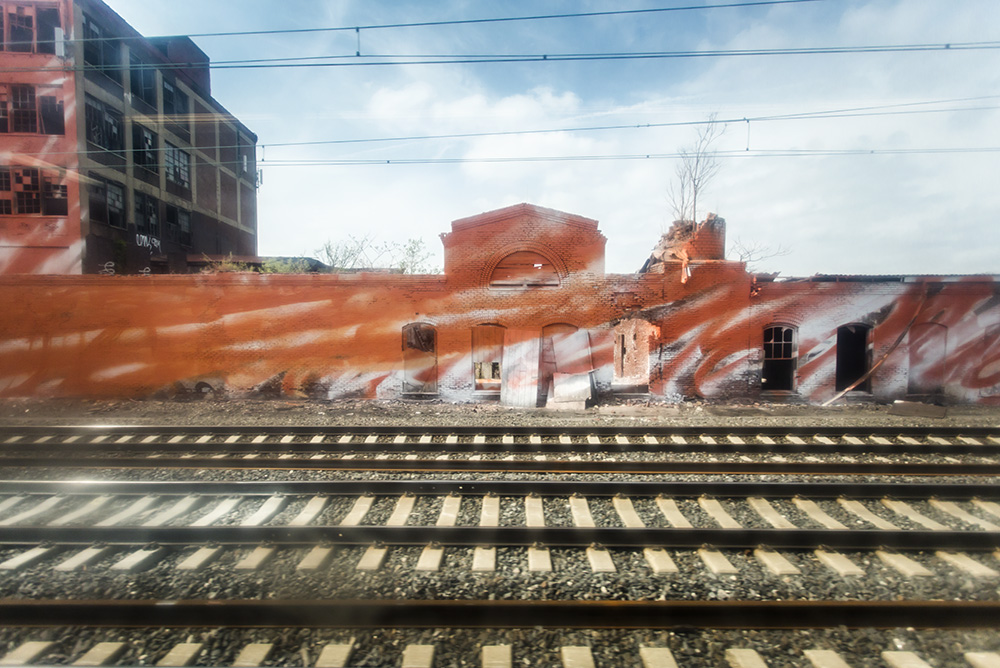
  • A few months ago on my ride to Center City on the Chestnut Hill West line, my ride became suddenly interrupted by splashes of hot pink, orange and green over grass, concrete and abandoned buildings.  Figuring this was additional graffiti by artists in the city, I mostly turned my nose up at the hideous clash with the landscape, and I wrote it off as a graffiti artist in Philadelphia with a large crew of helpers.  Most mornings I would spend mornings marveling at the bluish-green colors of the windows, the cracked brick, and the hints of grass that peek through my window of my morning commute. Now, I see creamsicle.

    psycholustre

    Now I had to deal with neon colors that were in fashion when I was an emerging tween in the late 80s/early 90s.

    Disclaimer: I am not anti-graffiti by any stretch of the imagination.  I can’t say I am a graffiti artist aficionado, and I typically notice this type of art in a fleeting manner – on a bike, train or car.  Even when I enter abandoned buildings, I am often struck by the faded infrastructure of the building and certain tags or symbols. Usually graffiti artists know how to stay away from the public eye and create intricate type, landscapes and symbols.

    A few weeks later, I learned that artist Katharina Grosse – she recently showed at MassMOCA – had a grant from The Philadelphia Mural Arts Program to create jarring landscapes to help us unwashed masses really look at the landscape we all ride by everyday.  I immediately was insulted, and angered that someone had this answer to ‘helping’ people view their surroundings in a deeper manner.  This was hardly a ‘beautiful disruption’ to my daily routine.  It looked like some privileged artist got to dump paint in places she will never live or encounter besides her glorified paint project with her friends.

    The exhibit, called Pyscholustre, is viewable via the SEPTA regional rail (Trenton and Chestnut Hill West lines) as well as The Atlantic City line and from Amtrak trains traveling from New York City/Philadelphia.  This geography hits people coming in from points in the metropolitan area that range from quite affluent to extremely destitute.  The transportation network this covers is quite expansive, networking major global metropolitan areas, weekend tourist arenas, sleepy suburbs and parts of Philadelphia that don’t come to mind for tourists eager to see Independence Hall.

    This brilliance of light highlights areas of blight so the passerby can simply notice them. Is the hope to inspire entrepreneurs to tear down the factories and build condos?  What lies behind the thin veneer of hyper color?  Somehow I have a hard time believing that Philadelphia Mural Arts Program and the artist took a minute to get to know any of the people who inhabit the nearby space.  The border may be an invitation, but how about you invite people who live in the city to capture and define those borders?

    What also angers me is the people who produce graffiti along the same train lines – dare I say, people who aren’t white – face high risks of arrest and scorn for their cultural production.  Why does Psycholustre get to be legitimate?

    This comes at a time when Philadelphia’s ant-graffiti network via The City of Life, Liberty and You department begins aggressively regulating and tracking graffiti art.  The department recently started using the ArcGIS application to document locations of graffiti.  While it is easy to demonize the owners of private property in this instance, they do pay the brunt of expense for removing graffiti. It isn’t a wonder that city officials are listening to property tax paying citizens who don’t want to foot the bill for removing spray paint.

    Sure, this is a gray area, especially if you are wary of property ownership.  This app also targets graffiti artists who are doing their projects on the same industrial building where Grosse completes her work.  Grosse and her well-protected comrades don’t have to worry about getting first, second and third degree misdemeanor charges or getting beat up by the cops in order to place paint onto buildings.

    There is a certain dystopia that emerges in the once populated factories and dried out grass next to the train tracks.  It doesn’t take more than riding a bike, or even driving a car, to see that people live amongst the abandoned buildings. With widening inequality emerging in late capitalism, certain property is deemed more worthy of routines of cleanliness, often brought to you by private contractors and taxpaying city services.  Rarely does a person go to any of these buildings unless they want to admire the durability of the structures that still stand – and yes – the graffiti art.

    Nor do I go to the extreme of David Lynch, who sees any graffiti as a defacement of the artistic structures of the industrial era.  He too thinks that Katharina Grosse’s work  is a ‘travesty’.  In addition, he thinks any graffiti defaces properties and doesn’t draw anyone to understand the structure as it is.  While many of these buildings are works of art given the craft that went into creating the brinks, steel and glass structures,  these buildings are unoccupied and serve as a canvas to rework the city landscape.  While I do think some graffiti can highlight the aesthetics of a structure, I also think it has the potential to help rethink landscape and structures that have remain abandoned for decades.

    If the point of Psycholustre is to get an artist that is deemed legitimate by the art world to rethink space, then I consider it misguided.  There are graffiti artists The Philadelphia Mural Arts could have consulted for a widescale project.  How about the artists who create graffiti everyday?  Don’t they know more about the space they reshape?  Why is their art considered defacing, and Philadelphia Mural Arts approved work considered an exhibition?  If Psycholustre is a mural, then I want the muralists who painted work far before her to come back and tag her mural.

  • Cassandra stands in a slow moving line for the alpine slide. She checks her phone, anxious about the battery running out in the next 20 minutes. Hopefully her sons will remember to meet her by the entrance of the slide.

    The line lurches forward. With the line and ride, Cassandra figures she has 20 minutes to get on the slide. How long would the ride last? Five minutes?

    Her sons wanted to ride on the alpine slide, a contraption so high that they have to take a ski lift up the brush covered mountain. Cassandra trusts a log on a pulley more than a free floating blanket on the slide.

    Her husband gets back from the convention in three hours. He oversees a large digital marketing department back home in Maryland. They finally could afford a vacation again, but they keep it cheap by having the hotel – and some airfare – covered. After all, they just paid off their credit card debts.

    Last time Cassandra took a painting class, she wondered if she would ever see true sienna. Varying hues of orange brown swept the landscape, and at many micro-seconds the harmony of the orange and green seem perfectly complementary. The expansive space and dramatically shifting rifts of a panoramic landscape made her feel ill at ease. Usually she is nestled within the trees, aware of the slight inclines. Panoramas like this typically exist within a 45-minute drive for Cassandra – always a destination rather than part of driving down the highway.

    What is brown’s compliment? Grey? Even the white has its black.

    Cassandra turns off her phone when she lifts the metal bar and sits on the thick plastic wood painted slide. The chair’s slight cushion is a welcome respite after standing for a half-hour. She eyes the log in front of her turning to the left over the bridge connecting one micro valley to the other. She takes out her phone, fumbles with the screen, and takes a picture of the sign ‘Entering the Ride – Please Fasten Your Seatbelts’ with the log in front of her and the end of the bridge in site.

    After the bridge, she someone whooshing quickly past her on the right. She takes a picture of the incline nestled between dry pine trees. The quiet of the background at times gets punctured by delightful squeals and gleeful screaming. Maybe she would get a motorcycle or replace her bike when she gets home so she can feel the breeze tangle and cool her head during quiet spring days.

    The apex turns sharply to the right and holds her for a moment. She clasps her giant lime green bag and grabs onto the handle bar with her phone underneath. The log lurches forward, slipping her grip. Her phone ricochets of the front of the log. Unable to lean forward far enough to grab it, the ride moves forward. Her phone falls back into the shallow entrance of the log.

    Cassandra feels her heartbeat increasing. Without her phone, she can’t contact her husband or children. What if she can’t find anyone? The boys can’t drive to the hotel. She lodges her foot to the right of the log, but it keeps slipping with the downward twists, turns and motion of the sienna tinged chocolate brown track. The phone clatters back and forth in the hard plastic cubby.

    A sharp right turn – the sharpest one yet – appears after a slow decline. Cassandra curls her toes and scoots it to the cubby. She clenches her thights and calves, determined, and annoyed that she didn’t put her phone in her bag.

    The bottom of the mountain is in sight, and she sees her children waiting at the entrance of the ride. The phone stays secure in the cubby. She takes a deep breath and closes her eyes for the slowing speed of the log. Maybe she would have a margarita tonight.

  • Does anyone who grew up with landlines and no cell phones sometimes feel like building a digital identity is a strange pursuit?  As much as I peripherally read fluff job seeking articles that tout building a personal brand is essential for surviving in this moment, to connecting with others, to getting a job, I can say that it just seems like a deeper connection with software design and the access to a wealthy lifestyle that lures people into policing their meta-self.

    Does this mean less of an awareness to surrounding conditions outside of the realm of the machines?

    I also feel like I don’t care to brand myself or become my own personal advertising agency with clear and consistent messaging.  I used to think social media was a way to stay connected with loved ones, but that so called love feels thin and way less satisfying than connecting with people in other ways.  This profile is just a shell of many of my experiences.  I feel like this shell is what people take seriously.  It is time to retreat, to escape this dread.

    Is my desire to shut down and turn off just an escape?

  • There is a major split in my life. As in, I never know when I am over sharing or not sharing enough. When I don’t share enough, I feel FMO – fear of missing out. When I do over share, I often want to lock myself into a room and not come out for days.

    With all of the emphasis on personal branding and maintaining an image online that is consistent with day to day life, I find that I am neither my online identity. Nor am I myself in the flesh without someone looking through my old photos. I used to liberally invite people into my social circle, and I even wondered if adding people I would only speak with one would be worth my brain space.

    Social media does take up my brain space, and it becomes more precious to me as I age. Why are pictures of my ex-partner’s sister’s children populating my brain space? This leads me to thinking about my ex – and we are on good terms – and wondering why I hop into relationships in general without thinking too much about mutual interests. which, in essence, is a rabbit hole. If I dates someone with all of my interests, then I would never be open to new experiences.

    And here is the thing. I notice that people hold you to what you say on social media. I see social media as platform that produces affect. Since people generally want to surround themselves by positivity, notes about how people are really doing – or hurting – gets swept to the wayside.

    Why aren’t those feelings allowed to be public? Sure, they can be as public as anyone would like for them to be. That is the thing – it is a choice. With increasing programs in positive psychology and a focus on tuning out anything challenging, the individual must rely on people in the flesh to grieve.

    Studies do show that the more negative emotionality posted on a site, the more likely people aren’t going to engage with the content. Instead of censoring emotionality, perhaps we can live in a society where people can have mixed feelings and be public about them.

    Within a traditional narrative, there is a story arc – the introduction, rising action, some sort of climax, and then closure and resolution. The social media story that I read about someone else is more nebulous than a narrative, and I also know that it is only a representation of presentation.

    Perhaps I have become less in representations of myself. Can I just see you in-person? Do I need to take photos when I see you? Can you forget about the noise that is the representation of myself? I know these questions just make me seem like an Eeyorish type who can’t accept the present, or the future for that matter. I would like to go home and not speak with anyone for the next two weeks.