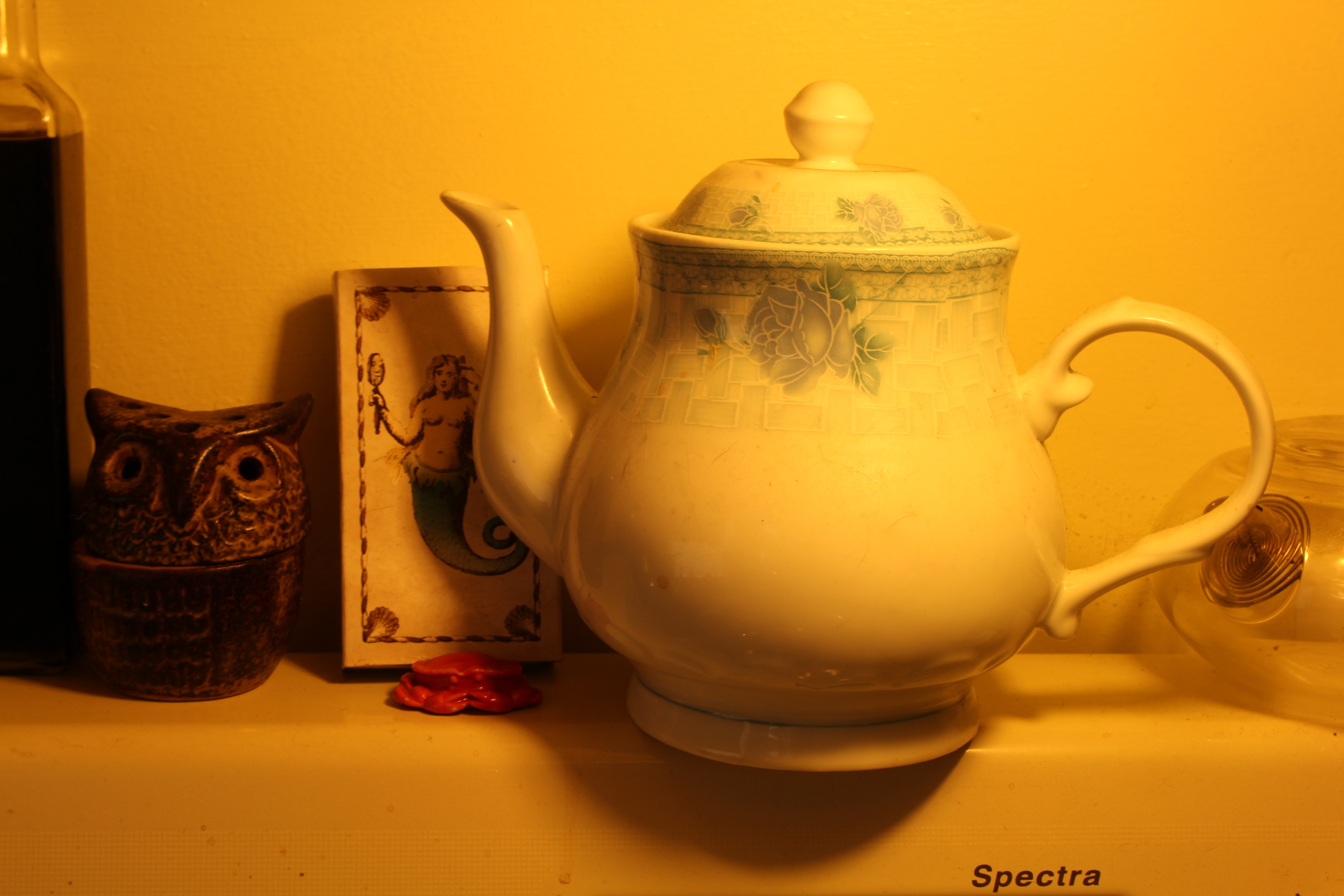
I feel like I am in my 40s in all of the right ways. My appreciation for tea is high – it makes me drink water. Some people just seem to know to drink water, like an internal alarm goes off that says ‘drink water’, and it isn’t questioned. Often, I forget to drink water, then realize hours into dehydration that I am utterly thirsty.
Another factor is I am forgetful, the type who forgets to bring around a reusable water bottle, or a Camel Back for longer hikes. I abhor having to buy plastic water bottles, and will go without water if I know I’ll get to water soon. Even when I buy bottled water, I feel this overwhelming sense of grossness that I only finish the bottle half the time. Not logical behavior, but no one is getting points for logic right now.
And something about water coming from pipes that have variable levels of care makes me hesitant, at least more recently, to drink what is out of the faucet. The American way, get the cheapest thing built so it can get to done so we can rebuild it again later.
My dry, desiccated veins just want some dang water, that’s more of the alarm bell.
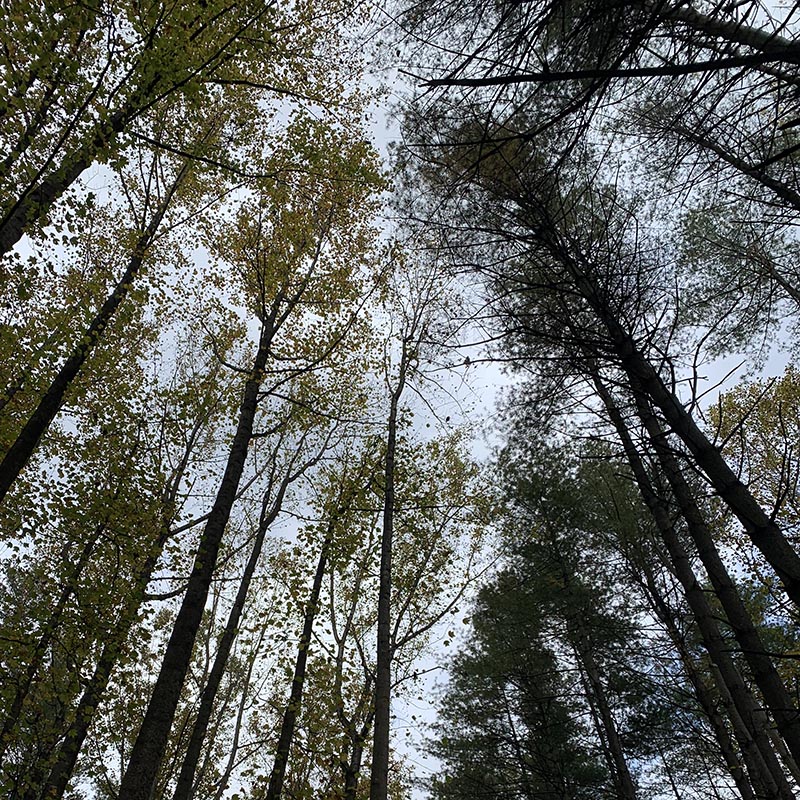
It’s been dry this season in Baltimore. Hoping for rain, or some relief to all of the dust in the air. The leaves on the oaks seem less robust this year, and shedding seeds softly, quietly. I will miss this view from the back deck, one that’s perfect for sipping a cup of water and staring at the blobs of surrounding trees.
In my youth, I was a crier. A crybaby. Someone who cries frequently at inappropriate times. In class. In the hall. In a teacher’s classroom office. In the family living room. At dinner.
I got deemed as a sensitive, a particular crime in the pull yourself up by your bootstraps loving suburbs of Atlanta in the 90s. And even a deeper crime to my parents, who both started their careers at one of the first Home Depot stores. My dad in particular wore working long hours as a badge of honor; my mom had more of the attitude that people who want to put in the extra time deserve a boost. It was their first major adult job, a temporary commune that fueled the future hyper-capitalistic machine that is now The De-pot.
They had me at the dawn of the Reagan years in their mid-20s, both fresh from conservative upbringings and surroundings. My dad became an emancipated minor at 15 after years of abuse, physical and emotional. My mom’s dad died suddenly and tragically when she was 11 – my grandma had to go back to work. Mom all of the sudden had responsibilities to raise her six year old sister.
Both my parents had incredibly difficult childhoods, and married when they were in their mid-20s. My mom had me at 24. Divorced at 27 with two kids. Kept working until she was 30, then got remarried and had two more kids. By the time she was 35, she had four kids. When I turned 35, I remained committed to remaining childfree.
So yea, my queerness evoked with my mom the ‘what did I do wrong’. She worried about me having a hard life. Dad, well, he knew cause one of the women he dated called it. He’s never cared, and nor has mom once she got used to the idea.
But the crying. Oh, the crying. I didn’t even always know why I was crying in my childhood and teenage years, the salt, the red face, the sticky aftermath. My parents probably did cry – especially my mom – and now that I am older, I wonder if they ran out of tears by the time they had me, and just wanted me, well, not to cry.
The desire to acquire came from a simplicity of wanting more than freezing bedrooms and eviction based moves. And to not live in poverty again.
***
One thing I accepted a long time ago is my parents didn’t know what to do with a sensitive child. Anytime I got into a spell of worry and anxiety, I was entitled, over-emotional, selfish, and many other things. ‘Get over it’ was one of my dad’s favorites. My mom, usually not as immediately callous, but not exactly patient,
I had two favorite bathroom stalls in high school.
One by the lunchroom where I could escape and listen to all the other teenage gals chat about boys. If gossip happened, I covered my ears. That bathroom’s dingy grime and narrow gap between the stalls and mirrors didn’t exactly encourage anyone to linger.
Any performing art, really, would have to forgive my ability to completely forget the difference between right and left on command. In space and voice.
Yet on a screen, or a flat surface, the difference is clear.
A hug, it hurts when I realize I squeezed extra hard on the shoulder where gramps needs surgery.
A collision with a dancer, going the right direction.
I left home, only to wander around, pinning right to east and left to west. The subway direction helped me do the flippy-floppy north to south.
Still, tell me to hold out my right hand; oops, that was my left hand.
I need a nap most days lately. My naps aren’t for sleep.
A mental sigh from the current moment of zinging from climate change, the multiplicity of wars, inflation, and Roe vs. Wade.
In my naps, my mind wanders, and wonders.
I drive, shell-shocked by all the re-movement. It is a continuation of stillness over the past couple of years, one where even seeing large groups of people or sitting in moving vehicles feels strange, unsettling, where our breath intermingles. To share a breath, how intimate is that now?
Initially, it wanders into the relief of sunset ovaries, and a momentary justification for my proclivity for sugar.
Kids. I knew I didn’t want them when I was 14 and was the oldest of parents who married young and had me and sis, divorced soon after, and had more kids. Kids are a lot of work. Going to a lot of baseball games is even more work, gymnastics meets for sis, grandma care, sometimes I helped, sometimes I resented sitting in the car so much, going here, going there, in transit between my parent’s emerging worlds.
I wonder why my dog can get sterilized at ease, and I have to beg.
When I see an assemblage of words that carry me back to the thrilling loneliness of my 21st birthday on a mountain ridge.
What voice does color have?
Silver, mountains, even though in reality, those mountains were the usual leafy bark.
Do you feel what you are thinking?
All alone, far from home, with a bandana of painting Bears, but a more industrious Care Bear quality with a McDonald’s palette rather than Jerry’s bears. I got it at the fair.
Tone is expansive, right?
Toner for the face, Tone the body, Atone your sins, Visceral tone of lemon cake happens when I see true mustard or even smell lemon peel, and not staring at the color of the sun. Attempts at sweetness, for sure, even if my tone feels self-muted, ambient, at most times. At times.
I have a speech disorder. It has made transitioning to UX and design a unique journey for me, one where what I have to overcome to communicate is a little different than my more verbal peers.
It started at five when I almost got held back in kindergarten because the teacher thought I didn’t know how to count. Even though I hate standardized tests – they test how well you take the test, not all the different forms of intelligence – I can thank the Iowa Skills Test for Basic Skills for helping me pass Kindergarten with some high percentile score.
Apparently, I wouldn’t tell my teacher my name and address on command, even though I had known it since I was 3 (according to my mom). I hated talking in front of people. Or to people I didn’t connect with, the ones who proclaimed their judgments so openly, clearly, and easily. I would daydream, nap at my desk, and feel bored most of the time. So, there are the bad social skills.
There was also the fact that my mom was single at the time, and the kindergarten teacher gave that empty empathy teachers do when parents challenge them. Don’t get me wrong; teachers are awesome. My beef is with the teachers that do that empty empathy voice so well. No teacher, you are crushing dreams! And underestimating what some parents know, especially if they don’t come from apparent means.
Working on data and verbal communication is more of a means to an end of my career goals. If I want to be a designer and researcher, then I have to think analytically and present my ideas in a cogent manner that is digestible to wide audiences. I didn’t have the luxury of starting this career path when I was 15; we didn’t have a graphic design or robust computer arts program where I went to high school, and gender discrimination expressed itself differently in the Southeast than it did across the rest of the country in the late-90s.
Anyhow, I know way more than I let on, especially for folks who primarily look for verbal and spoken cues.
****
Why is my background so topsy-turvy, a story that meanders, one where the rising action still feels like it is happening?
The main difference between me now and me in my 20s is I can string together a sentence or question that is cogent, most of the time. I can also organize, and do it well enough that people think I am good at it. It takes more effort for me than others to do this kind of work, to string a logical sentence together or organize data. Attention to detail and organization are hard learned, and not innate, skills for me because both do require making sense of patterns. And pattern making is how I can make sense of what goes where.
As someone who went to speech classes as a kid because I remained non-verbal at apparently inappropriate times, I find this is ultimately what holds me back in career matters. It is why I love pre-scheduled meetings, collaboration, and organizational order. Some of this helps me be more creative, to know what sentences I have to string together, to not be in the constant anxiety of surprise. Writing jobs are hard for me without a visual component, mostly because all the jargon and structure start to overwhelm me.
And the surprises, and having to react minimally to new information. As I have learned to speak, or have practiced speech, I find rambling, trying to cover every point of the story, gets to me. Sometimes the story just has to cover the arc, and nothing more.
***
I HATED improv in high school; give me a script, and I will give you an artful performance. I loved scripts because I could speak within them, through them, and just play to emotion without being overwhelmed with the intake of new speech. Creating these contained spaces, and telling a story through script, can still move me to this day.
Even though TED Talks kind of make me grumble, I appreciate the sense of theater, and the storytelling aspect.
Of course, I took improv in my adult life, and get what people think listening is. I have come to realize I listen vastly differently because of my experiences, but can mimic listening to the last word said quite well now. It is just one form of listening, a normative one, and one with benefits. Yet I find those who have that innate proclivity to logically string sentences together to be quite judgmental of folks who struggle with logical verbal communication. And I am drained if I have to communicate that way for long stretches of time. Sometimes listening happens beyond the last thing said.
People who don’t have non-verbal tendencies find people like me to overthink, to be aloof, calculating, etc. If I am vocal about inclusion, it is because my ability to express myself becomes a lot easier in environments that care about efforts to difference, and do not have the expectation that women are innately bubbly, effervescent, and smile all the time and good at organization.
If I get passionate about education, then some of it comes from attending NYU and seeing the vast difference in quality of schooling my peers received. While the high school I went to is now award winning, it was still a country school when I attended, rooted in agriculture. Digging deeper beyond my own experiences, the injustices and inequity of the education system became more apparent. Hauntingly apparent, and I am still seeing what I left behind struggle today. I found teaching exhausting; too much of the verbal communication that made me feel alienated in my schooling years.
I guess I have enough experience in both to be good enough at my jobs. I often feel frustrated that UX work seems to come easier to others, and that others find this work so ‘straightforward’. It seems like an abstract puzzle, one that feels like the answers are so simple, but all I see is depth and complexity. People often don’t come to me for straight shooter and smooth talking tendencies. I prefer less talking so I can take in all the ambiguity. Maybe I have fortitude, and I am happy that I am pushing into the skills I need to excel at designing things that help people like me who get overwhelmed with all the vocalization.